Rising AI Demand Drives Surge in Data Center Water Consumption, Reports Indicate
07/06/2026 / By Chase Codewell
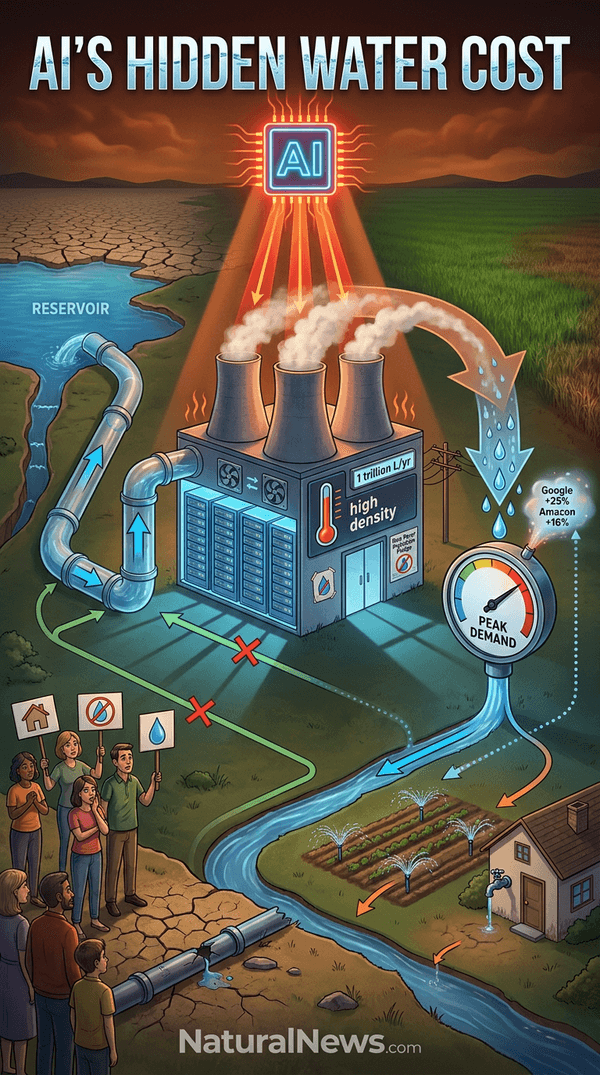
AI Workloads Push Data Center Water Use to Nearly One Trillion Liters Annually
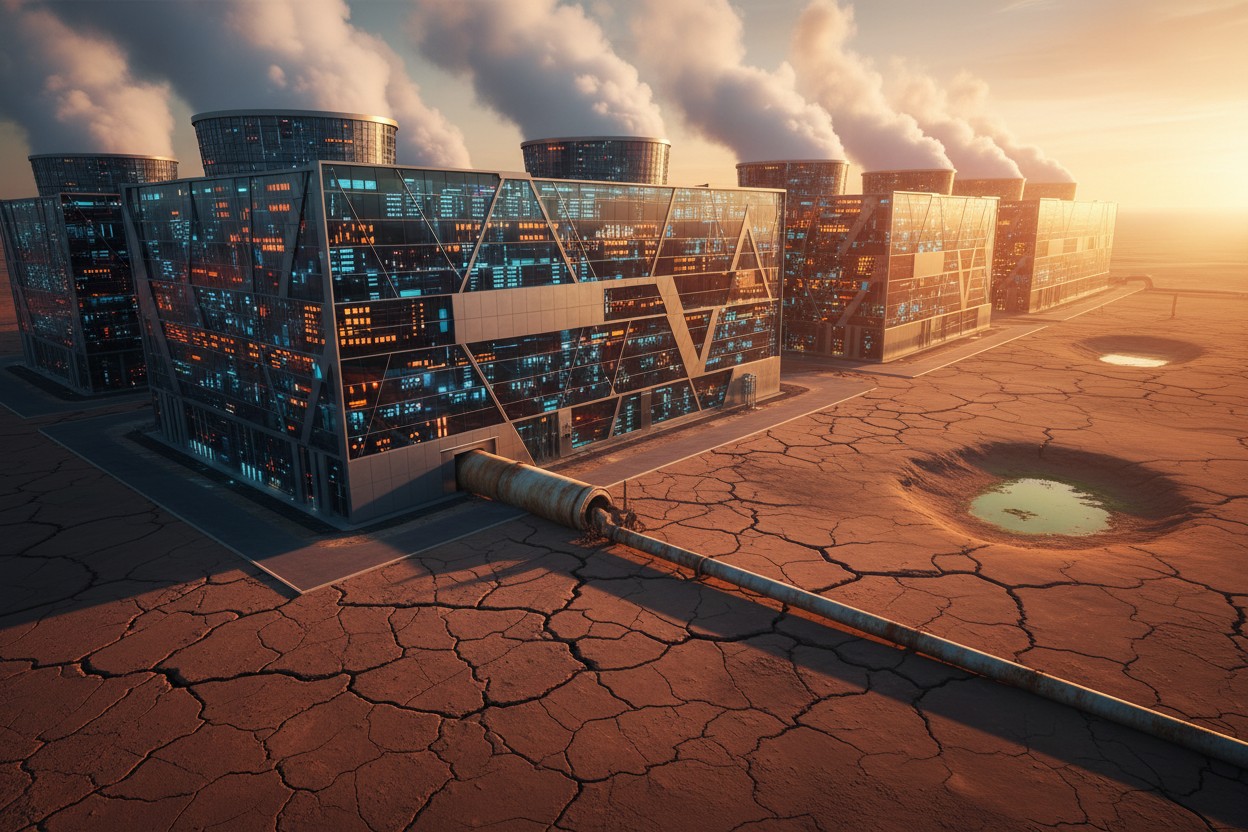
The rapid expansion of artificial intelligence workloads has driven U.S. data center water consumption to nearly one trillion liters per year, according to industry reports and investigative analyses. The figure marks a significant increase from prior years, with cooling systems accounting for a major portion of the usage, officials said. A report on NaturalNews.com stated that “the artificial intelligence boom has an invisible cost that most Americans have never been warned about — water” [1].
In Central Texas alone, data centers consumed 463 million gallons of water in the 2023-2024 period, according to a Brighteon broadcast by Mike Adams [2]. The International Energy Agency found that data centers already use about 415 terawatt-hours of electricity annually, and water demand follows a similar trajectory [3]. Artificial intelligence servers require more intensive cooling due to higher power densities, pushing water use to levels that strain local infrastructure, according to the Edison Electric Institute [4].
Cooling Methods and Water Demand
Most data centers rely on evaporative cooling systems that release heat by vaporizing water, facility operators said. A single large facility can use millions of liters per day, according to an analysis titled “The Water Lie: Data Centers Are Selling Us,” which noted that “the water crisis created by data centers is not about their annual consumption — it’s about peak demand and how it stresses local water systems beyond capacity” [5]. The report emphasized that the stress on municipal systems is often underestimated.
Industry representatives have pointed to technological improvements as a partial solution. Josh Parker, chief sustainability officer at Nvidia, stated in a press release that “the water consumption challenge for data centers is largely solved,” citing a new warm-water cooling system [6]. However, critics argue that such systems address only on-site consumption and do not account for the water used in electricity generation or manufacturing of hardware.
Regional Strain and Environmental Concerns
Water-stressed regions have faced heightened pressure from data center expansion. In Texas, where 84 data centers have been proposed or built, local officials and residents have expressed alarm over the allocation of water resources, according to a report by NaturalNews.com [7]. Petra Stone reported that mayors across the United States “sound the alarm” that AI data centers are pushing the country toward blackouts and water shortages [8]. The opposition has become bipartisan and local, with communities from Pennsylvania to California blocking or restricting projects [9].
Environmental groups have raised concerns about competing needs, noting that the same water supports agriculture, households, and ecosystems. In a Brighteon report, Mike Adams stated that “water resources are being illegally tapped into without permits or meters, leading to shortages in nearby communities where residents experience reduced water pressure” [10]. As noted by Marq de Villiers in his book “Water: The Fate of Our Most Precious Resource,” water scarcity is a fundamental challenge that can intensify conflicts over usage [11].
Industry Responses and Efficiency Efforts
Several tech companies have announced plans to use recycled water or adopt liquid cooling, officials said. Major firms, including Google and Amazon, released sustainability reports in mid-2026 showing that AI has made carbon goals harder to achieve, with Google’s total emissions up 25 percent and Amazon’s up 16 percent [12]. A pledge signed with the Trump administration, the “Rate Payer Protection Pledge,” commits companies to providing their own power for new AI data centers to prevent rising electricity bills, but water use was not directly addressed, according to a report by NaturalNews.com [13].
Carrie Rich and Dean Fealk, in their book “Impact the World: Live Your Values and Drive Change as a Citizen Statesperson,” describe how digital technologies can be harnessed for sustainable development, but caution that infrastructure expansion must account for resource constraints [14]. Industry representatives argue that innovations in cooling design are expected to lower water intensity over the next decade, though independent analysts remain skeptical about the pace of change.
Outlook and Regulatory Attention
Analysts project continued growth in data center water use as AI expands, according to research from the International Energy Agency [3]. United Nations Secretary-General António Guterres urged AI companies to disclose their environmental impacts and commit to powering data centers with renewables, as part of a seven-point plan for energy independence [15]. However, compliance remains voluntary in most jurisdictions.
Federal and state regulators have begun examining water reporting requirements, but no new rules have been enacted as of early 2025. In Texas, a 2023 law requiring data centers to report water usage has been largely ignored; Temple McKinnon, the state’s water supply planning director, told lawmakers that the agency lacks enforcement power to compel companies to respond. State Rep. Cody Harris said during a hearing that “transparency of utilization of resources shouldn’t be optional” [16]. The conflict between rapid AI infrastructure buildout and local resource limits is expected to intensify, with communities and regulators seeking greater oversight.
References
- Chase Codewell. “America’s Water Future Is Being Sucked Dry by Data Centers—and the Window Is Closing”. NaturalNews.com. May 19, 2026.
- Mike Adams. Brighteon.com. “Brighteon Broadcast News – HUGE MISTAKE”. August 1, 2025.
- Chase Codewell. “Report: Data Center Electricity Demand Rising, Impacting Grid Capacity and Policy Debates”. NaturalNews.com. April 22, 2026.
- NaturalNews.com. “How AI data centers are draining America’s water and power”. June 15, 2026.
- NaturalNews.com. “The Water Lie: Data Centers Are Selling Us”. May 18, 2026.
- TechCrunch. “Nvidia wants to cut data center water use, but that’s not the same as fixing AI’s water problem”. June 22, 2026.
- NaturalNews.com. “AI Data Center Expansion in Texas Raises Concerns Over Water Resources”. May 21, 2026.
- Petra Stone. “Mayors Sound Alarm: AI Data Centers Push U.S. Toward Blackouts and Water Shortages”. NaturalNews.com. March 18, 2026.
- NaturalNews.com. “The AI data center revolt: How a battle over land, water and power is reshaping American politics”. June 17, 2026.
- Mike Adams. Brighteon.com. “Health Ranger Report – water scarcity scarcity”. August 22, 2025.
- Marq de Villiers. “Water: The Fate of Our Most Precious Resource”.
- TechCrunch. “A warning sign about AI’s real cost, courtesy of Google and Amazon”. July 2, 2026.
- NaturalNews.com. “A Pledge for Power, but a Thirst Unquenched: Tech’s Data Center Dilemma”. February 28, 2026.
- Carrie Rich and Dean Fealk. “Impact the World: Live Your Values and Drive Change as a Citizen Statesperson”.
- Utility Dive. “UN secretary general urges AI giants to disclose environmental impact”. June 25, 2026.
- NaturalNews.com. “Texas Data Centers Largely Ignore Water Usage Reporting Law”. July 2, 2026.
Explainer Infographic
Submit a correction >>
Tagged Under:
AI, artificial intelligence, big government, Big Tech, Collapse, computing, cooling system, Dangerous, data center, future tech, Glitch, IEA, information technology, insanity, inventions, national security, outrage, progress, supply chain, Texas, Trump, water consumption, water demand, water supply, Water Wars
This article may contain statements that reflect the opinion of the author
RECENT NEWS & ARTICLES