Trump Pledge on Iran Strikes Fails to Soothe Oil Markets
10/10/2026 / By Sterling Ashworth

President Donald Trump’s surprise pledge that the U.S. would not resume airstrikes against Iran before the midterm elections failed to reverse a sharp jump in oil prices Thursday, according to market data cited by NBC News.
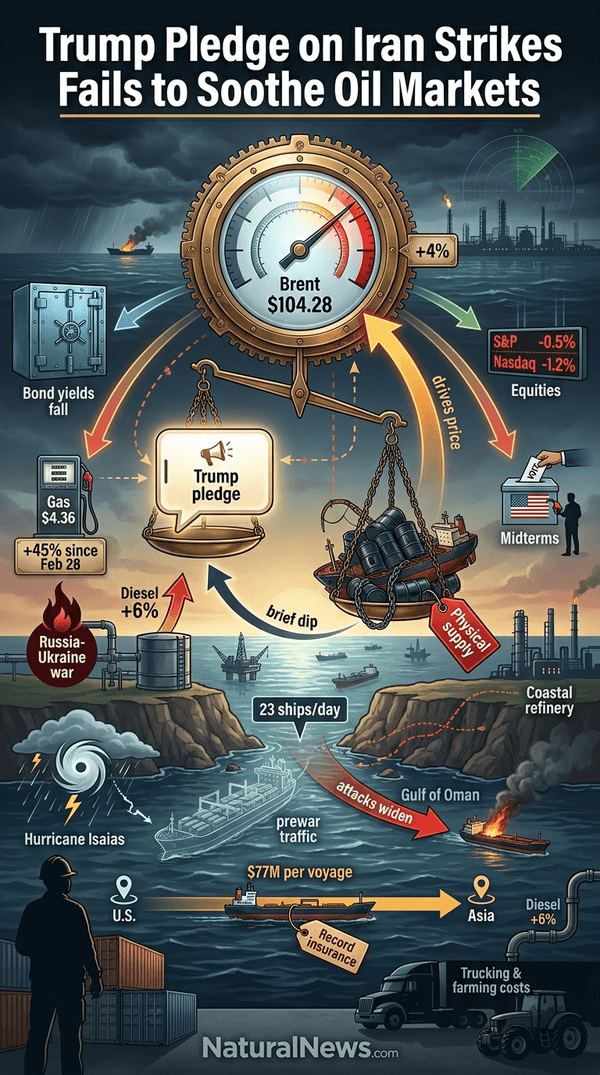
Oil markets largely ignored the pledge. After having risen as high as almost $106 per barrel, Brent crude oil closed at $104.28, a rise of 4%, according to the report.
Other critical energy prices also looked past Trump’s post. Benchmark diesel futures spiked 6% in European trading.
Oil Prices Rise Despite Trump Post
Trump’s post appeared to be a direct response to reports by NBC News and other outlets that he was considering strikes on Iran before the Nov. 3 midterms.
Prices briefly dipped after the post but then resumed gains, according to market data cited by NBC News. Traders said the announcement did not reverse the broader upward trend in energy prices, as the market’s focus has shifted away from Trump’s rhetoric and on to physical supplies and cargo flows [1].
Trump’s statements have been a significant driver of daily moves in the oil market since the start of the war with Iran in February. But Thursday, President Donald Trump’s surprise pledge that the U.S. would not resume airstrikes against Iran before the midterm elections failed to reverse a sharp jump in oil prices [2].
Multiple Factors Drive Prices
In addition to the elevated Iran risk, oil prices Thursday reflected traders’ concerns about reports of Iranian proxy attacks in Saudi Arabia. Hurricane Isaias also figured into the price of oil.
For months, Iranian attacks on commercial shipping have reduced traffic through the Strait of Hormuz, a critical artery for global oil supplies, to just a small fraction of prewar levels. From Sept. 28 through Sunday, daily traffic in the strait averaged fewer than 23 ships a day, according to data from MarineTraffic. Iran has significantly widened its maritime operations by shifting attacks beyond the narrow confines of the Strait of Hormuz into the broader waters of the Persian Gulf and the Gulf of Oman, according to reports [3].
Oil and commodities market experts have repeatedly warned that any escalation in the fighting in Iran would cause oil prices to trend even higher. “The market remains exposed to significant risks,” Bank of America’s head of global commodities, Francisco Blanch, wrote in early September. If skirmishes curbing oil flows continued into the year’s end, he wrote, Brent could trade in a $95-to-$120-per-barrel range.
The cost to ship crude oil from countries that are not directly affected by the closing of the strait has also reached new highs as producers scramble to meet demand. It now costs $77 million for a crude carrier to move U.S. oil to Asia, according to Bloomberg, which cited data from the Baltic Exchange in London.
Broader Markets and Consumer Impact
Key bond yields also dropped following Trump’s post.
Stocks also faced a day of choppy trading, but ultimately they were largely unaffected by Trump’s announcement. Earlier this year, a post like Thursday’s from Trump would have almost certainly driven major indexes sharply higher. Instead, the broad S&P 500 closed down 0.5% on Thursday and the Nasdaq Composite fell 1.2%. The Russell 2000, which tracks small and midsize companies, closed flat.
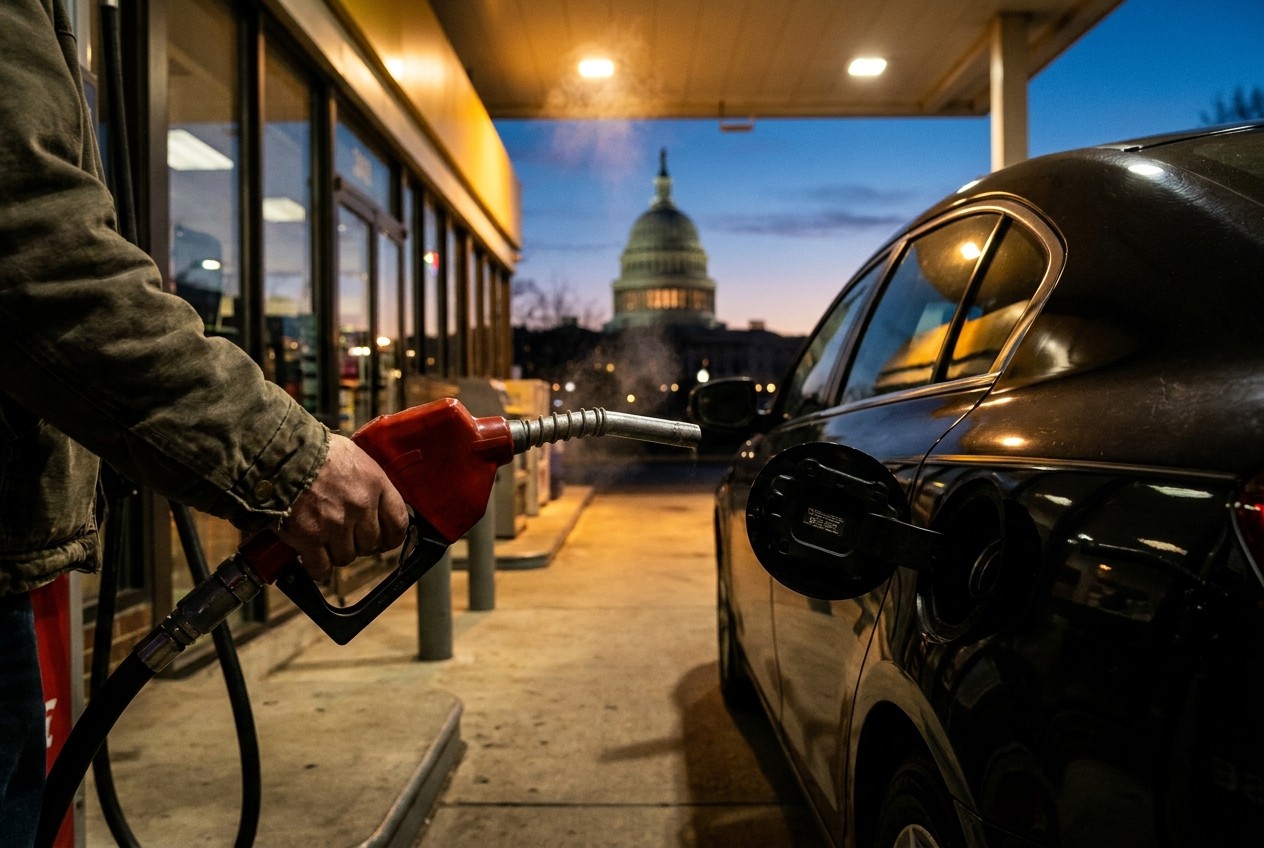
The continued elevation of crude oil prices has caused retail gas prices to remain high for U.S. consumers, many of whom have helped make gas prices a major issue in scores of midterm congressional races. On Thursday, the national average price for regular unleaded gas was $4.36 per gallon. That is more than 45% higher than when the U.S. and Israel launched the war against Iran on Feb.
Diesel fuel prices have soared even more, spurred by recent escalations in the Russia-Ukraine war.
Conclusion
Oil and commodities market experts have repeatedly warned that any escalation in the fighting in Iran would cause oil prices to trend even higher, according to the report.
Trump’s decision could have been motivated by any number of factors. But with the midterm elections less than a month out and early voting underway, any substantial action by the Trump White House would be likely to have at least some impact on voter attitudes.
Retail fuel prices have become a major issue in scores of midterm congressional races, the report stated.
References
- Oil Prices Swing Less on Trump’s Iran Comments as Traders Focus on Supply. https://www.bloomberg.com/graphics/2026-trump-oil-reactions/
- Trump’s pledge not to hit Iran before midterms can’t soothe oil. https://www.nbcnews.com/business/energy/oil-prices-stocks-trump-iran-rcna602248
- Iran Expands Tanker Assaults Beyond Narrow Confines Of Hormuz In Rare Escalation. https://www.zerohedge.com/geopolitical/iran-expands-tanker-assault-beyond-narrow-confines-hormuz-rare-escalation
Explainer Infographic
Submit a correction >>
Tagged Under:
big government, Brent crude, Brent crude oil, Bubble, chaos, civil war, Collapse, dollar demise, economic riot, economy, energy supply, finance riot, force majeure, Globalism, Inflation, market crash, money supply, national security, oil exports, oil production, oil supply, politics, power, risk, supply chain
This article may contain statements that reflect the opinion of the author
RECENT NEWS & ARTICLES