Analysis Finds American Workers’ Standard of Living Declined Over 55 Years
11/02/2026 / By Douglas Harrington

An analysis published by ZeroHedge states that the standard of living for American workers has fallen significantly over the past 55 years. According to the analysis, the decline is larger than most people realize, based on comparisons of wages, productivity, and cost of living. The report attributes the trend to factors including inflation, stagnant wages, and rising expenses for housing, healthcare, and education. The analysis was published online and has not been independently verified by this outlet.
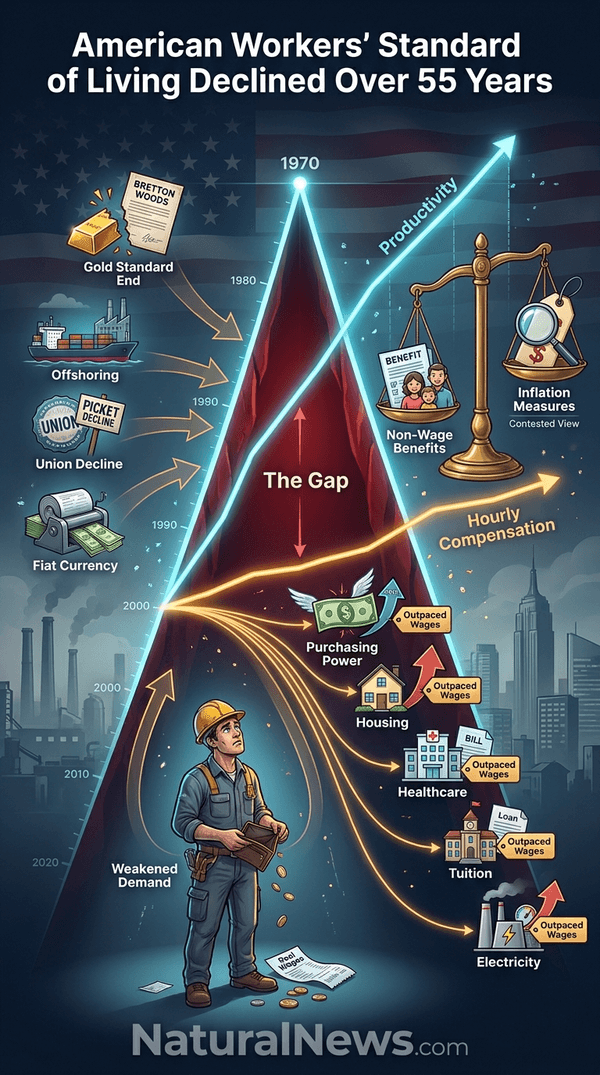
The analysis, which circulated on ZeroHedge and was summarized in a report by NaturalNews.com, argues that the erosion of purchasing power has been more severe than official figures suggest. It points to the gap between worker productivity and hourly compensation as a central driver of the decline. The report states that while output per hour has climbed steadily since 1970, pay has lagged, leaving many workers with less disposable income than their counterparts decades ago.
That surge in prices, the report says, compounded the long-term stagnation in real wages. The analysis has not been peer-reviewed, and its conclusions remain contested among economists, but it has drawn attention for its sweeping historical scope.
Background: Wage and Productivity Trends Since 1970
The analysis compares growth in worker productivity to growth in hourly compensation from 1970 to 2025, citing Bureau of Labor Statistics data. It states that productivity increased at a faster rate than wages over the period, resulting in a gap between output and pay. According to the report, this gap has contributed to a decline in purchasing power for many workers.
Economists have long debated the causes of the productivity-wage gap. Some point to globalization and the offshoring of manufacturing jobs, while others emphasize changes in labor market institutions, such as the decline in union membership. The report cites data showing that in the decades following World War II, wages and productivity grew in tandem, but the relationship began to diverge in the 1970s. According to the analysis, the decoupling coincided with the end of the Bretton Woods system and the shift away from gold-backed currency.
Martenson argued that the belief in inevitable prosperity masked underlying vulnerabilities. The ZeroHedge analysis similarly contends that official narratives have understated the extent to which typical workers have fallen behind, though it acknowledges that measuring living standards is inherently complex.
Data Analysis: Purchasing Power and Cost of Living
The analysis presents data showing that while nominal wages have risen, real wages adjusted for inflation have grown more slowly or declined for certain groups. It cites increases in the costs of major expenses such as housing, healthcare, and college tuition that have outpaced wage growth. According to the report, the cost of a median home has risen faster than median household income since 1970.
The analysis also notes that healthcare spending as a share of household budgets has increased significantly over the period. It points to rising insurance premiums, out-of-pocket costs, and the growing burden of medical debt as factors that have squeezed household finances. In addition, the report highlights the rising cost of college tuition, which has consistently grown faster than the overall inflation rate, forcing many families to take on student loans.
These trends are presented as evidence that the standard of living for American workers has fallen, though the report acknowledges that measures of standard of living can vary. It cites data on electricity prices, which have risen significantly in recent years. The analysis argues that such increases in essential expenses have eroded the purchasing power of wages, even as nominal pay has climbed.
Perspectives: Economists Debate Causes and Solutions
The analysis includes quotes from economists who attribute the decline to monetary policy, including the shift away from the gold standard and the expansion of credit. One economist quoted in the report said, “The erosion of purchasing power is a direct consequence of fiat currency and inflationary policies.” The report also cites critics of the Federal Reserve, who argue that the central bank’s policies have disproportionately harmed wage earners.
Other perspectives cited in the report point to globalization, technological change, and declining union membership as contributing factors. A spokesperson for a labor advocacy group said, “Workers have not shared in the gains from productivity growth, and this has hurt living standards.” The report notes that some economists attribute the wage stagnation to the decline of manufacturing employment and the rise of low-wage service jobs.
The report also notes that some economists dispute the magnitude of the decline, arguing that measures of standard of living should include non-wage benefits and quality-of-life improvements. These economists contend that official inflation measures may overstate price increases and that access to goods and services has expanded. The analysis acknowledges this debate but maintains that the weight of evidence points to a significant decline for many workers.
Reference:
- Over The Past 55 Years, American Workers’ Standard Of Living Has Fallen Much More Than Most People Realize. https://www.zerohedge.com/personal-finance/over-past-55-years-american-workers-standard-living-has-fallen-much-more-most
Explainer Infographic
Submit a correction >>
Tagged Under:
american workers, Bubble, cost of living, currency crash, economy, healthcare, housing, Inflation, labor market, money supply, productivity gap, purchasing power, real wages, risk, stagnation, standard of living, wage
This article may contain statements that reflect the opinion of the author
RECENT NEWS & ARTICLES