Blame Game or Reality Check? Israeli Ambassador Fires Back at Vance Over Iran War Criticism
11/08/2026 / By Garrison Vance

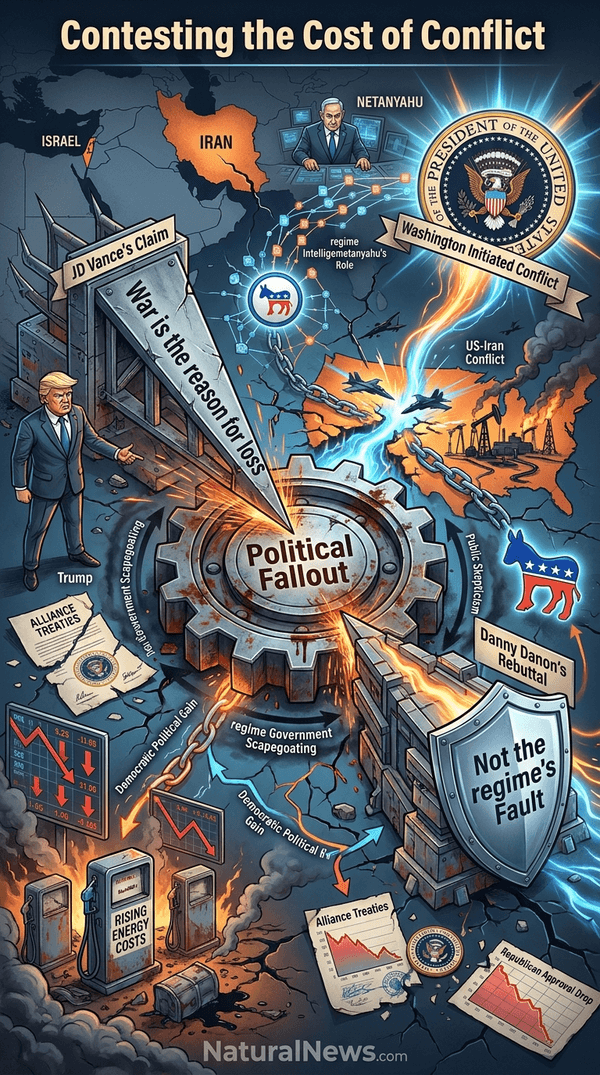
Israel’s ambassador to the United Nations, Danny Danon, rejected U.S. Vice President J.D. Vance’s assessment that the war on Iran was the determining factor in the Republican Party’s sweeping losses in the U.S. midterm elections.
Danon said the conflict was initiated by Washington and not by Tel Aviv, according to an interview with Israeli outlet i24 News [1]. Democrats regained control of both the Senate and the House of Representatives following the Nov. 3 elections [2].
The U.S. and Israel attacked Iran at the end of February, and the war has been followed by rising energy prices and cost-of-living concerns in the United States that Democrats sought to leverage politically, according to the report [1].
Vance Points to Iran War in Post-Election Message
In his post on X, Vance wrote, “But the real reason we lost is obvious to almost everyone… The reason we lost is the war. The president himself said so last night” [1].
Vance quoted President Donald Trump as having said in an interview that “I think a part of it was Iran,” while also saying he “would have done it again” [1]. Trump, asked about Vance’s comments, was reported to have “largely” agreed with Vance while remaining committed to the military action [2].
“If you’d like to argue it was worth it, that losing the Senate for the next six years was worth it, then do so,” Vance wrote, adding that “everyone knows why we lost” [1]. Other outlets, including The Guardian, reported that Vance said the war against Iran doomed the GOP in the midterms, which were “widely seen as a sweeping rebuke of Donald Trump’s presidency” [3].
Israeli Ambassador Rejects Blame
Danon told i24 News, “It’s very easy to always blame Israel for everything, but that is not the case” [1]. He said it was “unfortunate that many made the link between rising prices, mainly oil prices, and the situation here in Israel,” according to the report [1]. Danon also said it was unfair to link rising oil prices and the economic fallout of the Iran war to Israel, according to News18 [4].
Trump had earlier stated that his decision to launch military action against Iran was not a result of influence from the Israeli government, writing on Truth Social that “Israel never talked me into war with Iran” [5].
Danon said Israel would “have to pay attention” to voices critical of Tel Aviv in both the GOP and the Democratic Party, adding, “It will be harder for us” [1]. When questioned on a possible U.S.-Iran deal following the election results, Danon said, “We will always do whatever is necessary to protect ourselves” [1].
War Background and Economic Effects
The U.S.-Israel military campaign against Iran began on Feb. 28. The New York Times reported that in the weeks before the war began, Israeli Prime Minister Benjamin Netanyahu shared intelligence with Trump suggesting the Iranian people would rise and topple their government in the event of an attack, according to the report [1].
The economic consequences were swift. U.S. average gas prices surged 56% after the bombing of Iran, reaching $4.517 per gallon, as the Consumer Price Index rose 3.8 percent year-over-year in April, marking the largest jump in three years, driven by energy costs [6]. GOP approval of Trump’s handling of the war dropped 13 percentage points between March and September, according to a CNN/SSRS poll released in September A Reuters/Ipsos poll released in June found that only 24% of Americans believed the war was worth its costs, while half said it was not [7].
The resulting rise in the cost of living became a central issue for American voters. Analysts with the Trends Journal pointed to what they described as the political consequences of inflationary pressure, arguing that the public was struggling to reconcile official assurances with the reality of pump prices ahead of the midterms [8]. Trump had predicted in September that oil and gasoline prices would begin declining only “right after” the midterm elections [9].
Israeli Domestic Criticism of Netanyahu
In Israel, the GOP losses prompted a wave of criticism of Netanyahu from politicians and commentators who said he had become “toxic” for both Republicans and Democrats, according to the report [1]. Critics said that after the Democrats’ sweeping victory, Netanyahu could no longer lead Israel because of his unpopularity in the United States [1].
The criticism extended beyond the immediate electoral aftermath. Other analysts had warned earlier in the year that the conflict was eroding America’s strategic position.
References
- Israel’s UN ambassador rejects Vance’s claim that Iran war was behind midterm losses. https://www.middleeasteye.net/news/israels-un-ambassador-rejects-vances-claim-iran-war-was-behind-midterm-losses
- Vance blames Iran war for Republicans’ midterms defeat. Trump says he …. https://abcnews.com/Politics/vance-blames-iran-war-republicans-midterms-defeat-trump/story?id=137849295
- JD Vance says US war on Iran is ‘real reason’ Republicans lost midterm …. https://www.theguardian.com/us-news/2026/nov/04/jd-vance-iran-war-midterms-election
- Netanyahu’s Envoy Says Iran War Was ‘US Decision …. https://www.news18.com/world/us-decision-not-israels-netanyahus-envoy-pushes-back-after-vances-iran-war-remarks-ws-l-10413208.html
- Trump Attributes Iran War Decision to Hamas Attack Rejects Israeli Pressure Claims – NaturalNews.com, April 22, 2026.
- Iran conflict sends US gas prices soaring 56 fueling largest inflation spike in three years – NaturalNews.com, May 20, 2026.
- Poll: One in Four Americans Say Iran War Was Worth the Costs – NaturalNews.com, September 29, 2026.
- Health Ranger Report – IRAN HOLDS THE CARDS – Mike Adams – BrightVideos.com, March 10, 2026.
- Trump Predicts Nosedive on Oil and Gas Prices “Right After” Midterm Elections – NaturalNews.com, September 10, 2026.
Explainer Infographic
Submit a correction >>
Tagged Under:
2026 elections, approval rating, biased, big government, crude oil, Danny Danon, Donald Trump, economy, Foreign policy, foreign relations, fuel, intolerance, Israel, Midterm elections, oil prices, opinion poll, outrage, politics, polls, public opinion, truce, Trump, voters, war on Iran, WWIII
This article may contain statements that reflect the opinion of the author
RECENT NEWS & ARTICLES